Shifting States of Attention. Poznań Pavilion

AI algorithm hallucinations — Stany skupienia: NOVIKI (Marcin Nowicki, Katarzyna Nestorowicz), 22 April, 7:00 pm

In April, as part of the Stany skupienia series, we will host Marcin Nowicki and Katarzyna Nestorowicz from the NOVIKI studio. The event will focus on AI hallucinations. Following a screening of the films—or rather film essays—Machine Dream and The Image Beyond the Eye, there will be a conversation with the invited guests. As an additional point of reference for the discussion, the book I’ll Be Your Mirror (ed. Marcin Nowicki, Natalia Juchniewicz, Future Fragments, 2025) will be used.

Stany skupienia is a post-cinema event series curated by Andrzej Marzec. Each meeting consists of a short introduction, a film screening, and a conversation with invited artists. This year, every event also revolves around a specific theme, explored both in the film and in the discussion. Each time, the conversation is further anchored by a book selected or published by the guest(s) of the series.

Stany skupienia focuses on the work of stitching, assembling, and preserving a reality that has been fragmented and strained by multiple, overlapping crises. In response to the experience of a disintegrating, fractured world, grand, escapist utopian projects are no longer viable; instead, what emerges are everyday, local, perhaps even provisional practices of small repairs and attempts at regeneration.
FF at Taipei Netorks: Book Launch

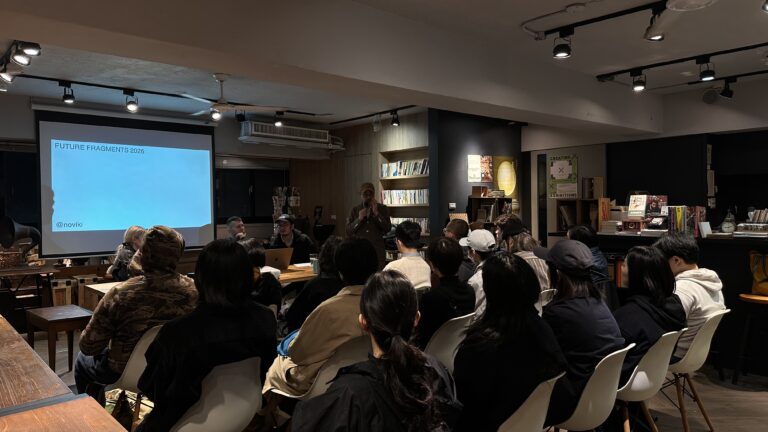
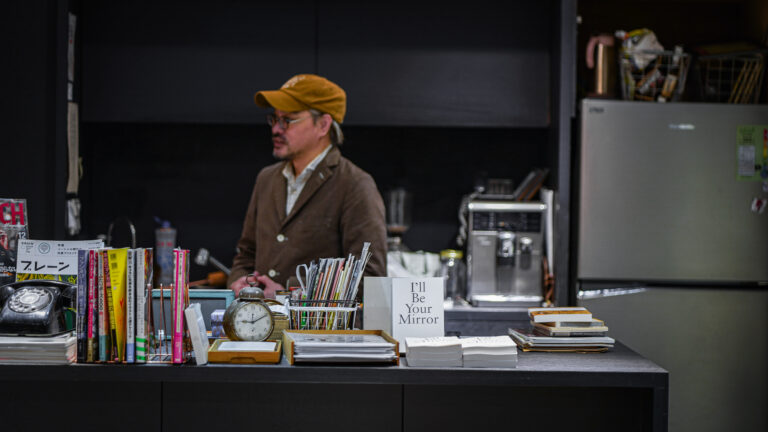
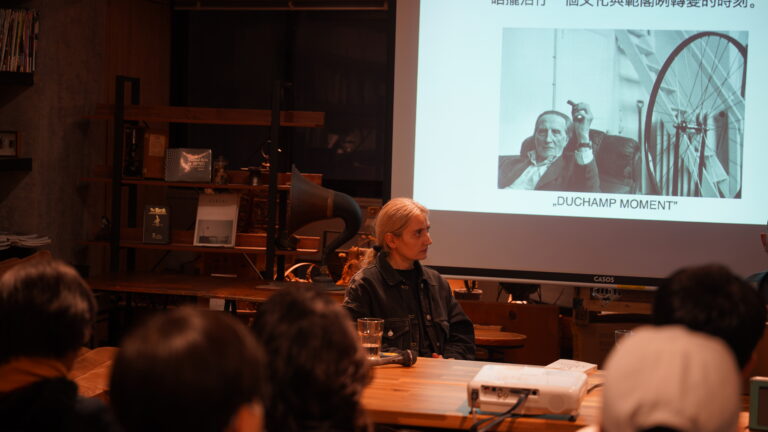
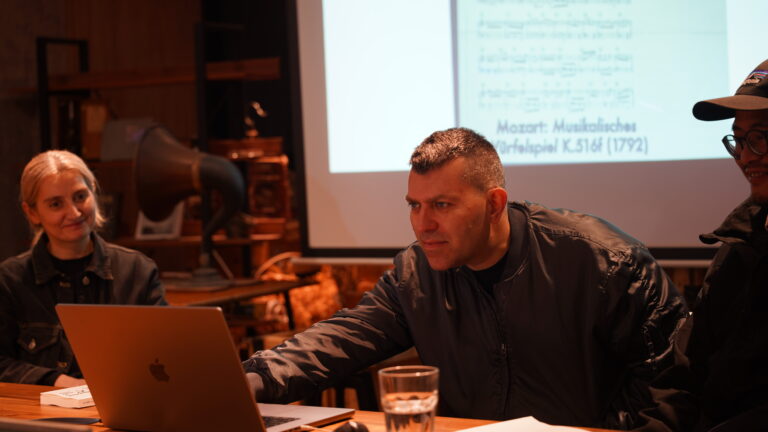
On January 28, the world premiere of Future Fragments took place at Mist Bookstore (薄霧書店). The publication is the outcome of the year-long Future Fragments program — a think tank exploring the intersections of technology and art, artificial intelligence, and contemporary artistic practices. The program unfolded through lectures, meetings, and an academic seminar, fostering interdisciplinary dialogue and research.

The launch gathered an audience interested in the evolving relationship between art and emerging technologies. The discussion focused on creative processes, the role of AI in artistic practice, and the future of collaboration between artists and technological systems.

The event was made possible thanks to the support of Instytut Adama Mickiewicza through the Networks programme.

@future_fragments_project
@mistbook
Ray JH Chang (張睿紘)
@mickiewicz_institute

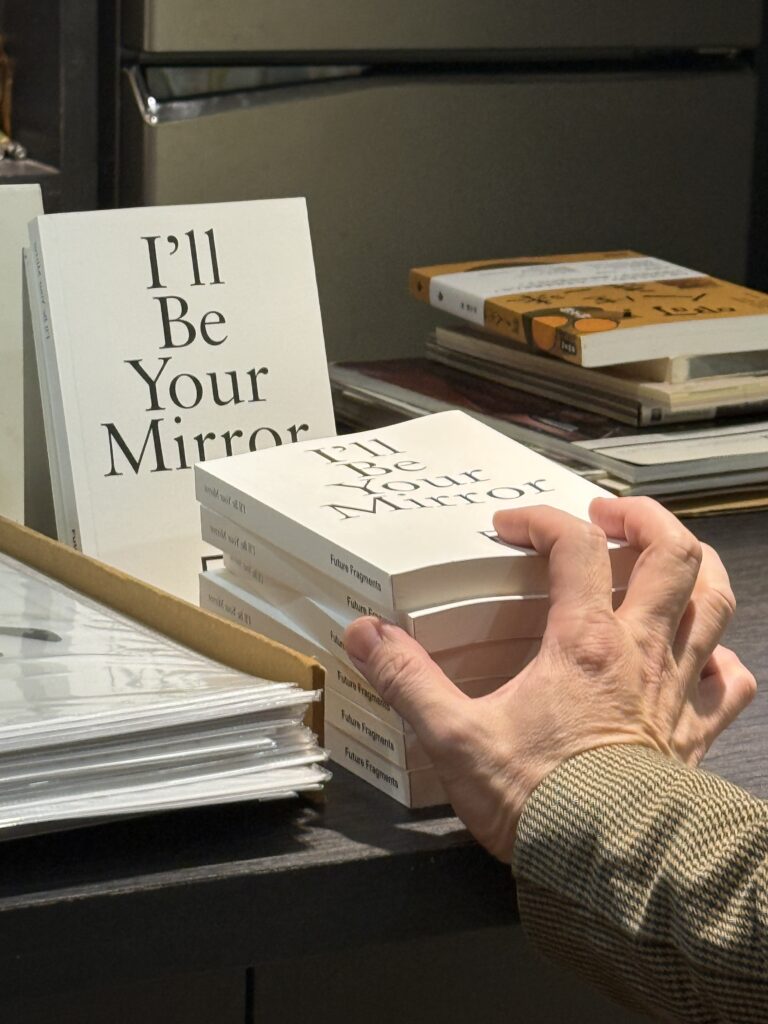
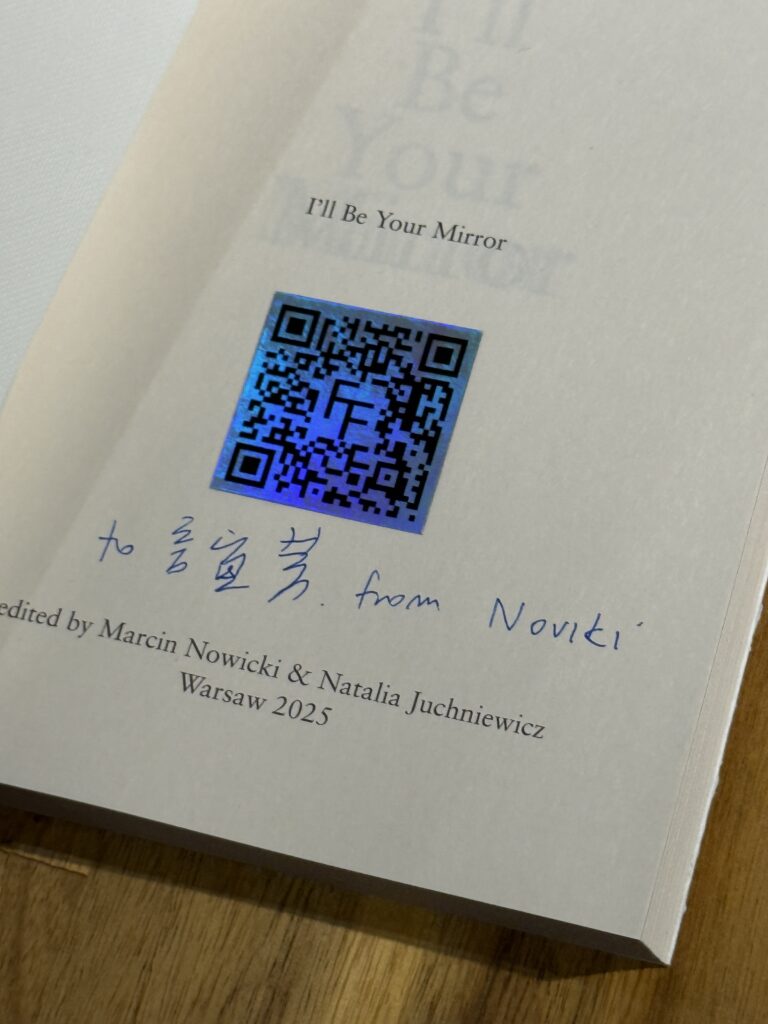
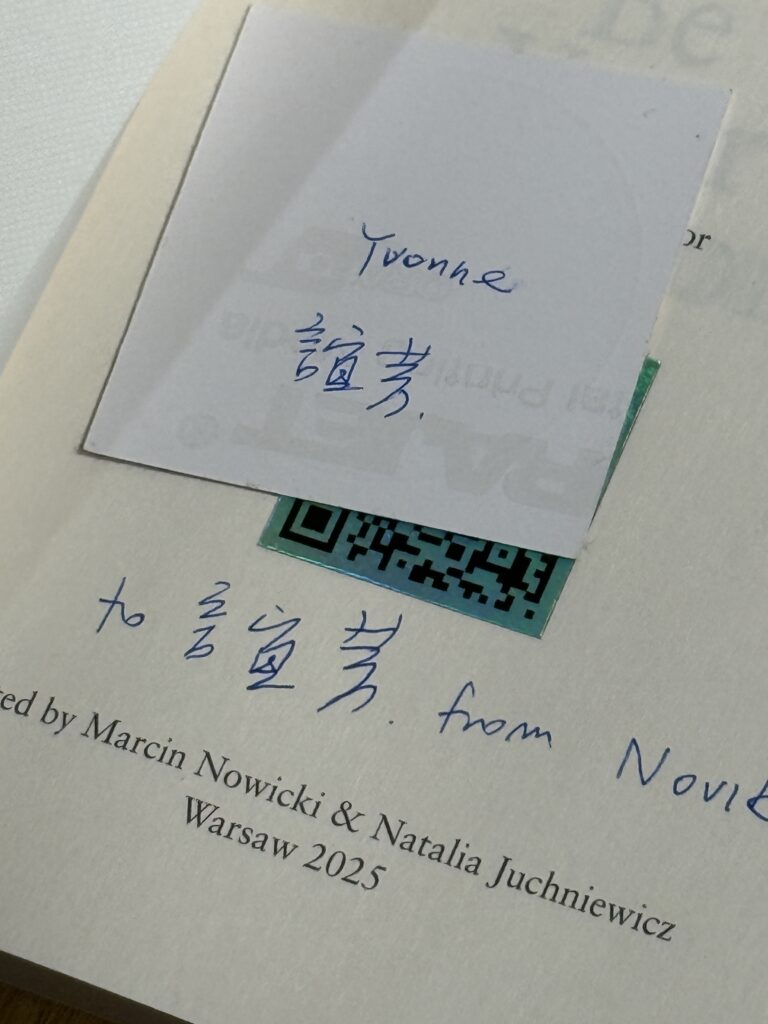
FF Books: I'll Be Your Mirror & Future Fragments Frame

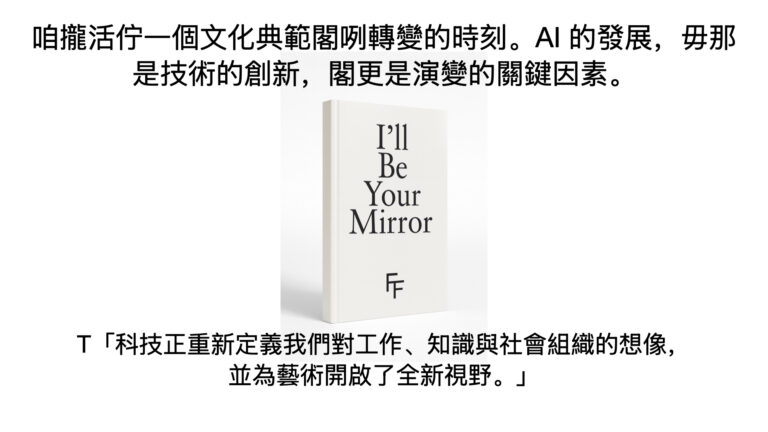
We conclude the 2025 edition of Future Fragments with the publication of I'll Be Your Mirror — a reflective, essayistic exploration of technology as the contemporary mirror. Inspired by Lou Reed’s lyrics, the book investigates how technology does not seduce but reveals; how images produced by cameras, algorithms, and artificial intelligence become a new organ of perception, acting beyond the human eye.

It traces the shifting economy of visuality — from Flusser’s technical images and Farocki’s operational images to Kate Crawford’s metabolic visual systems. As vision migrates into machines, technology becomes a mirror that exposes who we are: our desires, our fears, and the things we refuse to see.

I'll Be Your Mirror is also a meditation on the relational nature of AI, on the ontology of things, and on the shadow side of technological development, where innovation meets power, surveillance, and mimetic rivalry. The book weaves these fragments of contemporary thought into a single reflective surface — a mirror without a soul, helping us see ourselves anew.

DOWNLOAD I'll Be Your Mirror PDF HERE

The Future Fragments Frame publication features abridged versions of the lectures presented as part of the Future Fragments program in 2025. The texts were distilled and condensed by Michał Wisniewski.

→DOWNLOAD Future Fragments Frame PDF HERE

Letters & Spirit. New Typography

Letters & Spirit is an artistic research book exploring how typography transforms in the age of interfaces, algorithms, and artificial intelligence.

The publication draws conceptual inspiration from The New Typography by Jan Tschichold. Nearly a century after its publication, this project proposes a renewed reflection on what “new typography” might mean today. If Tschichold responded to the industrial modernity of the 1920s, Letters & Spirit responds to platform capitalism, algorithmic systems, and generative AI. The question returns with urgency: how should form respond to its technological moment?

The book begins with a simple premise: what happens to meaning when design decisions are increasingly delegated to systems? If every form is a decision, and every decision is a form of power, typography becomes more than visual arrangement — it becomes a political, cognitive, and ethical field.

Moving between essay, case study, visual experiment, the publication combines theoretical research with typographic exploration, treating the page as both argument and interface. Letters are not neutral carriers of content; they are active agents within a broader cultural metabolism.

Expanding beyond its initial concept, Letters & Spirit includes invited contributions from designers and thinkers reflecting on their relationship to contemporary tools and post-AI aesthetics. It integrates archival references and research notes, making the thinking process visible rather than concealed.

Formally, the book experiments with structure, hierarchy, and reading time, questioning inherited conventions of layout and authorship. Typography here is not illustration — it is method.

Developed through international lectures, workshops, and research visits, the project operates both as a publication and as a platform for dialogue. It does not nostalgically return to modernism, nor does it uncritically embrace acceleration. Instead, it proposes a contemporary re-reading of typographic responsibility in an age of automated form production.

Project Letters and Spirit. New Typography realized as part of a scholarship from the Minister of Culture and National Heritage of the Republic of Poland.

The World in Saturation: Perception Beyond Reality

We concluded the 2025 Future Fragments activities with an interdisciplinary seminar held at SWPS University in Warsaw.

Participants: Krzysztof Pijarski, Kuba Depczyński, Kuba Kulesza, Natalia Korczakowska, Jan Sowa, Katarzyna Nestorowicz, Andrzej Marzec, and Natalia Juchniewicz.

Future Fragments is an initiative that explores the impact of technology on our future, including how we understand intelligence. Today, intelligence is no longer seen as a fixed attribute of individuals, but rather as an emergent, relational phenomenon—unfolding through interactions among organisms, systems, and the environment. Technology, in turn, is not opposed to nature, but serves as another layer of the global ecosystem in which we live. Over time, as intelligence and technology continue to evolve—both in human and nonhuman forms—our understanding of their roles and mutual impact must also change.

Future Fragments is a dynamic, decentralized platform creating a space for voices, ideas, and individuals from various fields to converge and co-create the discourse on intelligence and technology. The lectures, discussions, workshops, presentations, and publications within Future Fragments are aimed at anyone interested in our changing present and the incoming future—researchers, creators, practitioners, and those seeking to better understand what is happening at the intersection of technology and culture.

Co-financed by the Minister of Culture and National Heritage under the Polish Creative Industries Development Centre’s own program: Rozwój Sektorów Kreatywnych. @crpkpl

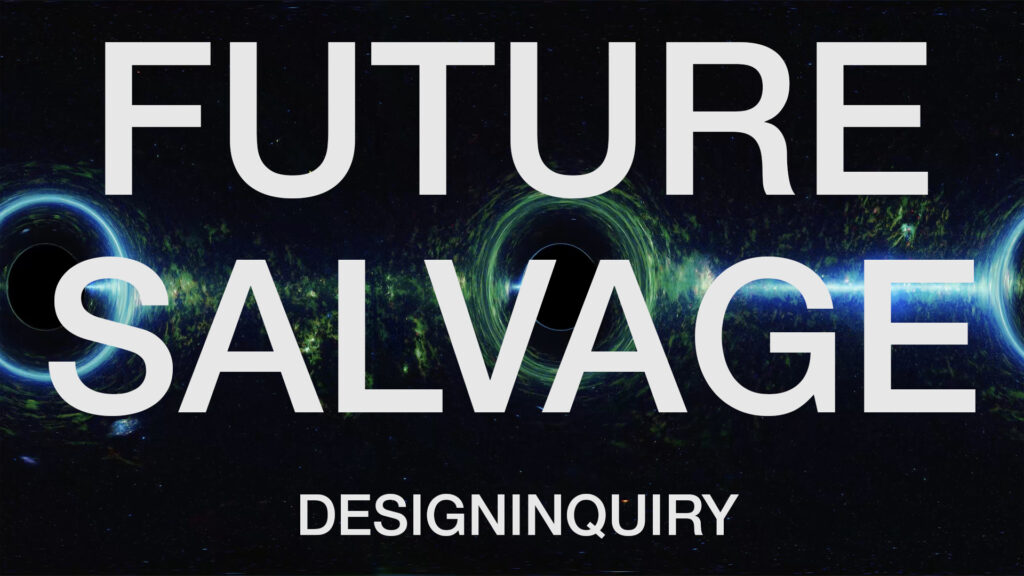
Future Salvage

DesignInquiry and a dynamic roster of participants and activators for a week long investigation through making, contemplating, printing, binding, and collaboration!

In this context, technology plays a crucial role—as a medium of analysis, reconstruction, and innovation. It enables the creation of new methods for processing materials, digital mapping of abandoned resources, and also supports participatory processes that allow communities to co-decide what is worth reclaiming. Digital technologies, environmental sensors, AI tools, and open-source platforms can assist not only in the practical recovery of materials and spaces but also in redefining value—showing that what seems “unnecessary” today can gain new life through knowledge, collaboration, and imagination.

Future Salvage, denotes a discovery of hidden value in something dredged up from the deep, something thought to be beyond repair. As a design act, it’s a transformation, a kind of alchemy, wherein new life is breathed into abandoned things. How, then, might salvage provide an ethos and an imaginary for our futures? Can we envision the salvage of cities, of democracy, of our relations with the natural world? The port city of Amsterdam provides a perfect venue for the topic of salvage, with its history as a term used in shipping insurance, and the city’s possible futures below sea level. Aside from transforming shipping palettes into furniture or abandoned buildings into communal residences, salvage also becomes a political theory, a “craft of the poor” and a way of making that activates a protesting public. Practitioners of salvage “open themselves to the new and unseen,” according to political theorist Jason Kosnoski, who sees salvage as one of the “arts of living on a damaged planet,” in the words of Anna Lowenhaupt Tsing.

more info: futuresalvage.designinquiry.net

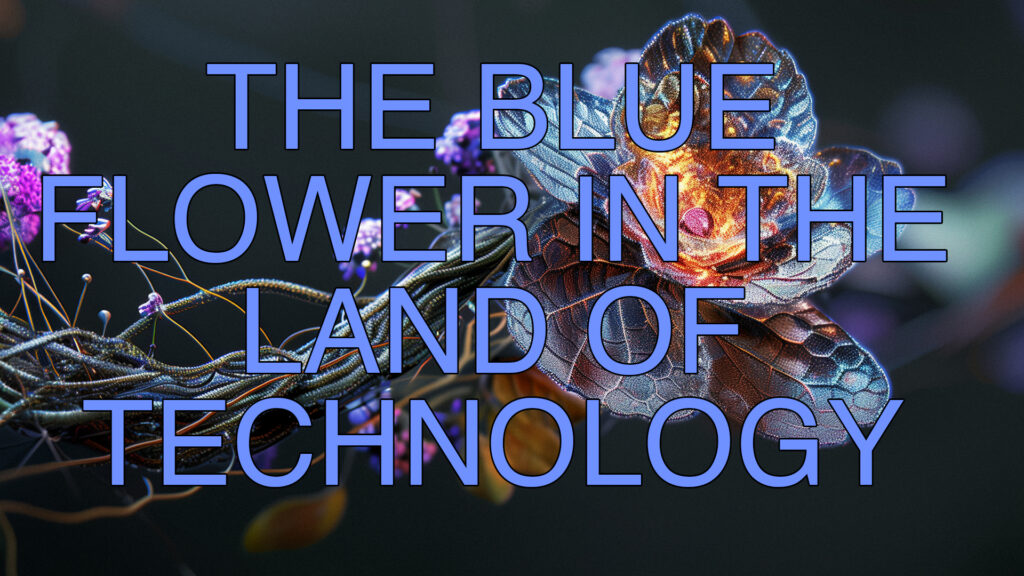
The Blue Flower in the Land of Technology

The discussion is taking place at Fotofestiwal in Łódź as part of the Future Fragments project.
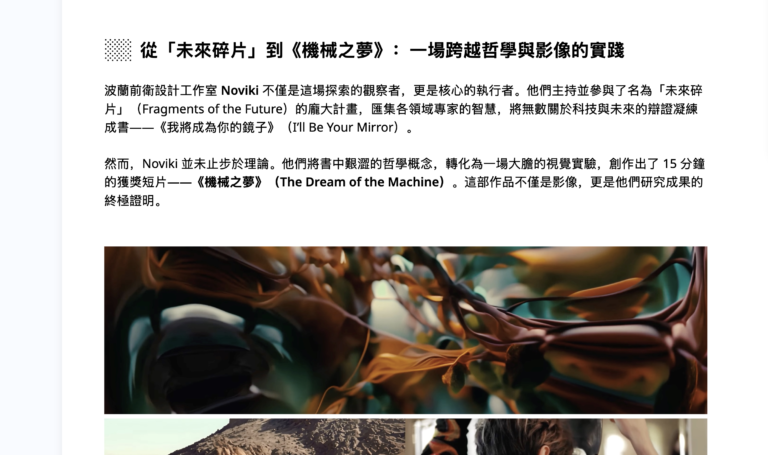
The starting point for the conversation is the interdisciplinary project Dream of the Machine by the artist-designer duo Noviki, and Post-Radio by director, film producer, and AI researcher Jacek Nagłowski, inspired by Wojciech Bruszewski’s Radio Ruins of Art.

The discussion features Ada Florentyna Pawlak—an anthropologist of technology, lawyer, and art historian—and Krzysztof Pijarski, a visual artist, contemporary culture researcher, and co-founder of the Visual Narratives Laboratory at the Łódź Film School, currently a lecturer at SWPS University.

Participants:
Ada Florentyna Pawlak, SWPS University
Jacek Nagłowski, vnLab / Łódź Film School
Marcin Nowicki, Noviki
Krzysztof Pijarski, SWPS University, vnLab / Łódź Film School

More: fotofestiwal.com